
Anjouan Casino Licence in the UK: What It Means
 Available in GB
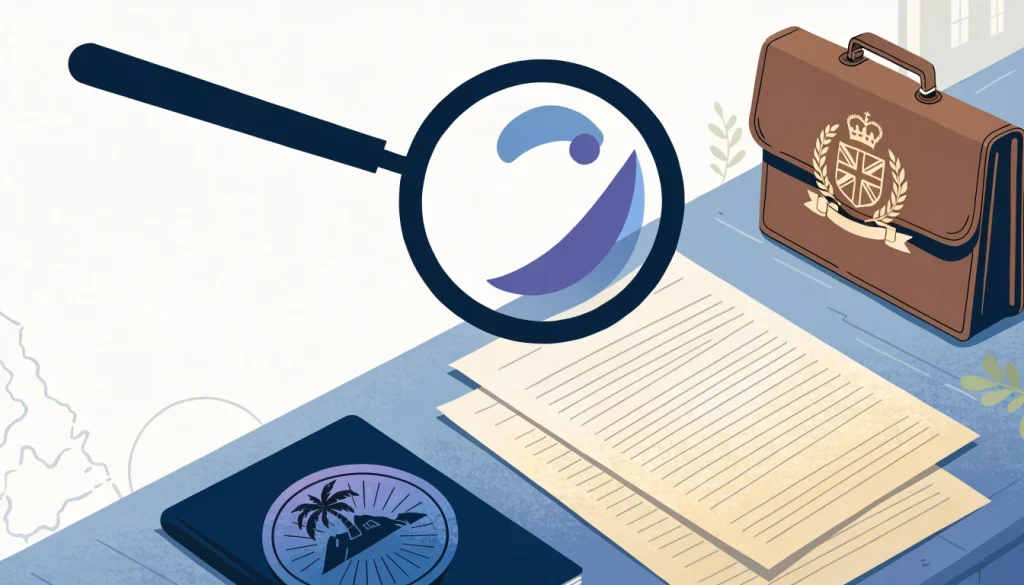
Anjouan authorisation operates within its own scope, while gambling services to customers in Great Britain require UK Gambling Commission permission.
Table of Contents
- What an Anjouan Licence Does—and Doesn’t—Cover in the UK
- How to Check an Anjouan Casino Licence
- Anjouan Online Casinos Are Outside the UKGC System
- The Small Print Behind Anjouan Casino Bonuses
- Anjouan Gaming Licences, GamStop and Complaints
- What to Expect When You Withdraw from an Anjouan Casino Site
- New Anjouan Casinos: Check More Than the Launch Date
- Anjouan Crypto Casinos and Other Deposit Routes
- How to Read Anjouan Casino Reviews with Your Eyes Open
- Offshore Casinos Licensed in Anjouan: The UK Legal Position
- Safety
What an Anjouan Licence Does—and Doesn’t—Cover in the UK
An Anjouan casino licence can tell you that an operator has authorisation under Anjouan’s framework. It does not, by itself, give that operator permission to serve customers in Great Britain. Those are separate questions, and mixing them up is an easy way to give a licence more weight than it carries.
The point I had to get straight was that a regulator’s name on a website is not a universal pass. Anjouan authorisation applies within its own scope; it does not replace the permission required under British rules. The Anjouan licence does not authorise operation in the United Kingdom or in other markets that are restricted under its terms.
For operators serving customers in Great Britain, the relevant requirement is a licence from the UK Gambling Commission. That requirement applies regardless of where an operator is based. So a company being registered or operating from somewhere outside Britain does not change the standard it must meet if it is supplying gambling services to people in Great Britain.
If you’re considering an Anjouan-licensed casino from the UK in 2026, check the licensing and availability details as well as the payment information. This list gives you the payout-speed detail available for each operator.
1. Amunbet
Payout speed: 1-3 business days Amunbet lists a payout speed of 1–3 business days, giving you a stated timeframe to consider when reviewing its payment information.
2. Jetsetspins
Payout speed: 1-3 business days Jetsetspins lists payouts at 1–3 business days. You can use this stated speed as one part of your payment review.
3. SpinFormula
Payout speed: 1-3 business days SpinFormula gives a payout speed of 1–3 business days, a useful detail for you to note when assessing payment arrangements.
4. NightWin
Payout speed: 1-3 business days NightWin lists a payout speed of 1–3 business days. You may want to consider this alongside the other details you verify.
5. Zombillion
Payout speed: 1-3 business days Zombillion states that payouts take 1–3 business days, providing you with a timeframe to factor into your review.
6. x3bet
Payout speed: 1-3 business days x3bet lists payouts at 1–3 business days. This gives you a stated payment-speed detail to consider.
7. SlotoSport
Payout speed: 1-3 business days SlotoSport gives a payout speed of 1–3 business days, which you can factor into your assessment of its payment information.
8. Chanze
Payout speed: 1-3 business days Chanze lists a payout speed of 1–3 business days. You have this stated timeframe to consider when reviewing the operator.
9. Britsino
Payout speed: 1-3 business days Britsino states a payout speed of 1–3 business days, giving you one concrete payment detail to note.
10. BeOnBet
Payout speed: 1-3 business days BeOnBet lists payouts at 1–3 business days. You can take this stated timeframe into account when checking its payment information.
That distinction matters because a site can present a genuine Anjouan casino licence and still lack the permission needed for the British market. The licence may relate to the operator’s activities under Anjouan’s jurisdiction, but it is not a substitute for a UK Gambling Commission licence. One credential does not automatically stand in for the other.
The operator’s location is not the deciding factor
It is tempting to think the question is simply where the casino company is located. I used to read a foreign address as if it settled the matter: the company was based elsewhere, so surely its own regulator was the only one that mattered. That is the wrong shortcut.
The relevant issue for Great Britain is whether the operator is serving customers there. If it is, its base of operation does not remove the requirement for a UK Gambling Commission licence. A business cannot make that requirement disappear merely by locating its offices or company registration outside the country.
This is why “licensed in Anjouan” and “authorised to serve Great Britain” should not be treated as interchangeable descriptions. They answer different questions. The first concerns Anjouan authorisation. The second concerns permission to operate in the British market. An Anjouan casino licence does not supply the latter.
The same boundary applies whether a site calls itself an Anjouan online casino, an international casino, or something else. Labels and location can make a site sound distant from British regulation, but they do not change the rule for operators serving Great Britain. The market they serve matters, not just the address they publish.
Casino Without a Swedish Licence: UK Rules and Risks
What the licence can and cannot tell you
An Anjouan licence is relevant to understanding the operator’s claimed authorisation in Anjouan. But it cannot be used as proof that the operator holds a British licence, or that it is permitted to serve Great Britain. Those conclusions do not follow from the Anjouan licence alone.
I find it helps to keep the claims separate. If a site says it is licensed in Anjouan, that is a claim about Anjouan. If it says or implies that this makes it approved for British customers, that is a different claim—and the Anjouan licence does not establish it.
This is not a technicality about wording. It changes what the licence means to someone in Britain. A casino may have an Anjouan gaming licence while still not having the permission required to serve customers in Great Britain. A foreign licence is not a portable permit.
The phrase “licensed casino” can sound reassuring because it leaves out the question of who issued the licence and what market it covers. I would not treat the phrase on its own as an answer. The important distinction here is straightforward: Anjouan authorisation does not cover operation in the United Kingdom, while operators serving Great Britain require a UK Gambling Commission licence, wherever they are based.
That is the boundary to keep in mind when you encounter Anjouan casinos aimed at, or accessible to, British users. The operator’s overseas base does not settle whether it may serve Great Britain, and its Anjouan licence does not settle that either. Different permission. Different regulator.
An Anjouan casino licence is not a substitute for a UK Gambling Commission licence and does not authorise an operator to serve customers in Great Britain.
How to Check an Anjouan Casino Licence
A licence badge on a casino website is a claim, not proof. If a site says it holds an Anjouan casino licence, I would start with the public register maintained by the Anjouan authority, rather than relying on the badge, a copied certificate or a line in the site’s terms. The key question is whether the register supports the operator’s claim.
Start with the register entry
Look for the casino or the company behind it in the public register. A casino’s trading name may differ from its legal company name, so check the site’s terms and conditions, privacy policy or licence page to identify the entity said to operate it. Then search for that company in the register.
If the register provides a licence number or another identifying detail, compare it with the information published by the casino. A match on the name alone can be too loose: similarly named businesses are not necessarily the same company. If the site gives a number but the register shows a different one, or the register names a different operator, treat that as an unresolved mismatch. Don’t fill in the gaps with assumptions.
A certificate image can be useful as a clue, but it is not the same as a live register entry. Images can be old, incomplete or detached from the company that now runs the site. I’d use one to find the details to check, not as the final check itself.
Match the company name carefully
The name in the register should correspond to the legal entity identified by the casino. Pay attention to small differences: a shortened name, a different spelling, or a company suffix may be legitimate, but the site should make the connection clear. If the casino gives no operator name, or its documents name one company while the register names another, you cannot confidently establish that the licence applies to the site in front of you.
This is the kind of detail that is easy to skip when a page looks polished. I have learned not to treat a neat logo or official-sounding wording as a substitute for a matching company record. If the relationship between the casino and the registered entity is unclear, ask the operator to explain it and look for a response that identifies the company plainly. Silence or a vague answer does not resolve the mismatch.
Check the expiry date and current status
A register entry is only useful if you check whether it is current. Look for the licence’s expiry date and compare it with today’s date. An old certificate may show that a licence existed at one point, but it does not establish that it remains valid. If the register includes a status field, read that too rather than relying on a date in a promotional page.
If the expiry date is absent, has passed, or conflicts with the casino’s own information, don’t assume the site is covered. Look for an updated entry or ask the operator for clarification. A date on a casino page and a date in the register are not equally persuasive when they disagree; the public record is the place to verify the claim.
How to Verify Licence
Find the legal entity
Check the casino’s terms, privacy policy, or licence page to identify the legal company name.
Search the public register
Look for that specific company name in the official Anjouan authority public register.
Compare the details
Match the licence number and company name exactly and check that the expiry date is current.
Keep a note or screenshot of the entry you checked, including the company name and date, if you may need to revisit it. That will not make the licence stronger, but it helps you compare what the operator says later with what you actually saw. Small practical step.
Know what a licence check cannot prove
A matching, current entry can support the narrow conclusion that the named company has an Anjouan authorisation shown in the register. It does not establish that every casino feature has been independently tested or audited. Anjouan’s framework does not require random-number-generator testing, audits or the segregation of player funds. A licence check therefore cannot, by itself, confirm that games have undergone independent testing or that customer balances are held separately from the operator’s money.
That distinction matters. “Licensed” sounds like a broad stamp of approval, but the register answers a more limited question: is the operator listed under the claimed authorisation, and is the entry current? It does not tell you everything about how the casino is run or what would happen if the business failed. No magic seal.
The register also does not settle every concern about how the operator deals with customers. Under Anjouan’s framework, operators must respond to complaints within 30 calendar days, but the authority itself does not handle, mediate or decide player complaints. So finding a valid entry should not be mistaken for having an independent regulator ready to resolve a dispute. That is a separate issue from whether the licence claim checks out.
What to do when details do not line up
If you cannot locate the operator, the register entry has expired, or the company names do not match, pause before relying on the casino’s claim. Ask the operator for the exact registered company name and the relevant register details, then compare them directly. Don’t treat a confident reply as verification unless the public record backs it up.
If the register is difficult to search or the details remain ambiguous, the honest answer is that you have not confirmed the claim. That is better than assuming a licence belongs to a casino because its website says so. A careful check can verify the entry; it cannot turn the licence into protections the framework does not require.
Anjouan Online Casinos Are Outside the UKGC System
An online casino can display a foreign licence and still sit outside the UK Gambling Commission’s regulatory system. That is the key distinction with an Anjouan casino: Anjouan is one of several jurisdictions associated with licensing online gambling operators, but an Anjouan authorisation is not UKGC oversight.
The term “non-UK-regulated casino” describes the relationship with the British regulator, not the operator’s location or the language on its website. These are gambling sites that do not fall under the Gambling Commission’s supervision. Some are licensed by Malta, Curaçao, Gibraltar or Anjouan. The licences come from different jurisdictions; their names should not be treated as interchangeable badges of UK approval.
Non-UK-regulated casinos may be licensed in various jurisdictions, such as Malta, Curaçao, Gibraltar, or Anjouan, but none of these provide UKGC oversight.
I used to read a licence logo as a quick answer to the question, “Is this site regulated?” It is an answer to a narrower question: a regulator in a particular jurisdiction may have authorised the operator. It does not, by itself, mean that the UK Gambling Commission oversees the casino or that the operator follows the same requirements as a UKGC-licensed business. Different regulator, different system.
That matters because “licensed” can sound reassuring while leaving out the part you actually need to understand. Anjouan-licensed online casinos are not UKGC-regulated casinos. The same distinction applies to sites licensed elsewhere: a Malta, Curaçao or Gibraltar licence does not turn a casino into a UKGC-supervised one. The country named on a licence tells you which jurisdiction is involved; it does not establish that UK rules apply.
What the label tells you
When a site is described as an Anjouan online casino, the description refers to its licensing connection. It does not tell you, on its own, what level of oversight you can expect in practice. Nor does the phrase “best Anjouan online casinos” change the regulatory category. A ranking or favourable review is not a regulator and cannot make a site part of the UKGC system.
That is why I separate three things that are often blurred together: where a casino is licensed, whether it is supervised by the UK Gambling Commission, and how much protection its rules offer a player. The first can be Anjouan. The second can still be no UKGC oversight. The third cannot safely be assumed from the licence label alone.
A non-UK-regulated site may have responsible-gambling and data-protection requirements that are less demanding than those imposed on UKGC-licensed operators. That is a broad difference between regulatory systems, not a claim that every Anjouan operator behaves in the same way. But it is enough to stop me treating a foreign licence as a substitute for UK oversight. The details of the operator’s own policies matter, and the same attractive wording can sit over quite different safeguards.
Safety and Regulation at Online Casinos
The distinction is easy to miss because the front end may look familiar: a casino lobby, account pages, games and promotional language. Familiar design does not tell you which regulator supervises the business. I have caught myself responding to polished presentation before asking the more basic question. It is a poor shortcut. A smart-looking site can still operate outside the UKGC framework.
Anjouan among other licensing jurisdictions
Anjouan is not the only place associated with online gambling licences. Malta, Curaçao and Gibraltar also appear in this context. Naming those jurisdictions is useful for orientation, but it should not be read as a league table or as proof that their rules are identical. They are separate regulatory settings, and a casino’s connection to any one of them does not automatically provide UKGC oversight.
So when you see “Anjouan-licensed,” read it as a statement about the licensing jurisdiction—not as shorthand for “regulated for UK players.” A site may use that label prominently, while the regulatory difference remains easy to overlook. The licence may matter in the jurisdiction that issued it; the UKGC system is a separate matter.
I would not call a site safe just because it carries a licence, or assume that every foreign licence offers the same safeguards. That would turn a useful detail into an advertising promise. The more accurate starting point is plain: Anjouan online casinos operate outside UK Gambling Commission oversight, and the standards around player protection and data handling may not match those for UKGC-licensed operators. No familiar logo changes that.
The Small Print Behind Anjouan Casino Bonuses
A bonus can look generous in a banner and feel much smaller once you open its terms. I’ve learned not to treat the headline figure as money I can simply withdraw. The useful question is what the offer makes you do before any winnings become cash, and what happens if you do not finish in time.
Start with the wagering requirement. A specialist review reports welcome offers with requirements of 35x or more, but that is a report about offers it examined, not a rule for every Anjouan casino. The multiplier alone does not tell you the real workload, either. Check what it applies to: the bonus, your deposit, or both. A separate specialist review describes a 40x condition that can apply to the bonus and deposit together, to the bonus alone, or to a bonus and free spins together, depending on the offer.
Non-UK-Regulated Casinos: What UK Players Should Know
That distinction changes the calculation. If the requirement applies to the deposit as well as the bonus, the amount you must wager is higher than if it applies only to the bonus. If free spins are bundled into the same condition, their winnings may not be treated separately. Don’t assume that “bonus funds” means one clear thing; look for the precise base used in the calculation. The small print is the offer.
Free spins bring their own clock and conditions. A specialist review reports packages with expiry periods ranging from 24 to 72 hours. That is a window in which to use the spins, not a promise that winnings can be withdrawn within that time. Check when the clock starts, whether unused spins disappear, and whether winnings then have a separate wagering requirement. A short expiry can make an offer awkward if you cannot play during the stated period.
The same kind of review reports that free-spin winnings may face wagering requirements of 30–50 times those winnings, alongside withdrawal caps of £5–£50. Treat those figures as examples reported by that review, not standard terms across every casino. A cap can limit the amount you are allowed to take away even if the spins produce a larger balance. And a large multiplier can leave winnings tied up until the required play is complete. “Free” is doing a lot of work there.
Before accepting an offer, I’d read the bonus terms in this order: what qualifies, what balance the wagering applies to, which games count, how long the offer lasts, and whether a cap limits the result. The banner may put the reward first; the terms tell you what you are actually agreeing to. If any part is unclear, do not rely on a chat message or a promotional summary to fill the gap. Look for the written terms attached to that specific offer, because conditions can differ between promotions and may change.
Do
- Check the wagering base (bonus, deposit, or both)
- Verify the expiry period for free spins
- Read the written terms for each specific offer
Don’t
- Rely on the headline bonus figure alone
- Assume free spin winnings are instantly withdrawable
- Trust a chat message over the official written terms
Comparing Anjouan casino bonuses is not just a matter of lining up the biggest headline amounts. A smaller offer with clear conditions may be easier to understand than one whose wagering base, expiry or cash-out limit is buried in dense wording. And a list of casinos tells you nothing by itself about whether a particular promotion suits you. I would treat any “best” label as a starting point for reading, not a reason to accept an offer.
If the terms make it hard to tell what you must wager or what you could keep, that uncertainty is part of the deal. Slow down.
Anjouan Gaming Licences, GamStop and Complaints
An Anjouan gaming licence does not connect a casino to GamStop. Casinos not on GamStop sit outside the UK Gambling Commission’s self-exclusion scheme, so registering with GamStop should not be treated as a way to block access to an Anjouan-licensed site. That distinction is easy to miss when a site uses reassuring language about responsible gambling.
A casino may offer its own account controls, but that is not the same as being part of GamStop or having the protections required of a UKGC-regulated operator. Before depositing, check what controls the site actually provides and how they work. Don’t assume you can set a limit, exclude yourself or get a restriction enforced across other casinos just because the operator displays a responsible-gambling page. The safeguard may stop at that site.
Complaints are another place where the difference matters. Anjouan-licensed casinos are not required to offer an independent dispute resolution process comparable to the UKGC-approved ADR route. The Anjouan authority does not handle, mediate or decide individual player complaints. So if you and the casino disagree, there is no equivalent independent route built into the licence framework to take the case to.
That leaves the operator’s own complaints process as the first step. Anjouan’s framework requires operators to respond to complaints within 30 calendar days, but a response is not the same as an independent ruling, and it does not guarantee that you will get the outcome you want. I would keep the complaint factual: include the account details needed to identify the issue, explain what happened, and save copies of messages and relevant records. Keep your wording calm. It helps to have a paper trail.
Read the casino’s complaints instructions before using the site, not when you are already arguing over an account or a balance. Look for where complaints must be sent, what information the operator asks for, and whether its terms describe any further step if you remain unhappy. If the process ends with the casino’s own decision, recognise that limit before you rely on it.
For me, the important question is not whether a site has a complaints page. It is who can review the dispute if the operator rejects your case. With casinos holding an Anjouan gaming licence, the answer is not a UKGC-approved ADR provider simply because the site is available to you or has a licence from another jurisdiction. There may be an internal process, but there is no comparable independent adjudication requirement.
No Independent Redress
Anjouan-licensed casinos lack a UKGC-approved independent dispute resolution process, meaning there is no external body to resolve your complaints.
The same goes for self-exclusion: a button on one casino’s account page, if offered, should not be confused with GamStop. If you need a scheme that blocks access across participating UK-licensed gambling businesses, an Anjouan licence does not provide that connection. Small distinction. Big consequences.
I would treat those gaps as practical limits, not fine print to skim past. Check the site’s own controls and complaint steps, and decide whether you are comfortable relying on them. If you need a recognised independent complaints route or a cross-operator self-exclusion scheme, a casino licensed in Anjouan does not supply either through its licence.
What to Expect When You Withdraw from an Anjouan Casino Site
A withdrawal estimate is a plan, not a promise. Some descriptions of non-UK-regulated casinos put payouts at 24 hours to 5 business days, depending on the payment method. Other accounts say a withdrawal can take three or four weeks. Those claims disagree, so don’t treat the quicker window as a reliable deadline for an Anjouan casino site.
The gap matters. A stated processing time may describe how quickly the casino expects to approve a request, not the whole journey from clicking “withdraw” to seeing funds in your account. Payment method can affect timing, and a delay may stretch well beyond the estimate. There is no regulatory clock forcing an operator to resolve a late payment within a set period.
I used to read the shortest payout claim as if it were the likely outcome. That was wishful thinking. If you need the money by a particular date, an advertised estimate is not a safe basis for planning.
Before requesting a withdrawal, read the operator’s current terms and check what it says about processing and payment times. Keep a record of the request and any messages about it. If the payment does not arrive when expected, contact the operator and ask for a clear update rather than assuming the original estimate still applies.
A delay does not automatically mean the money is lost, but it can leave you waiting with little leverage. Non-UK-regulated casinos sit outside the UK system, so you cannot rely on a UK regulator to enforce a payout timetable. That changes how I think about any balance left on a site: available to withdraw is not the same as already in your account.
Slow money. Real risk.
New Anjouan Casinos: Check More Than the Launch Date
A fresh launch can look like a clean start: new games, a polished site and a date that makes the operator seem current. I’ve learned not to treat “new” as a reason to trust a casino. It tells you when the site appeared, not whether its details hold up.
Before considering a newly encountered Anjouan casino, look for its entry in the public Anjouan licence register. Check that the licence has not expired, and compare the company name on the register with the name in the site’s terms and conditions. A close-but-not-quite match is not a detail I’d wave away. If you cannot establish that the entry and operator refer to the same company, the launch date does little to help.
Curacao Casino Licence in the UK: What It Means
That is a basic check, not a guarantee of how the site will treat you. A new operator has little public history to judge, so you may have fewer clues about how it handles account reviews or a disputed withdrawal. Don’t assume that a smooth-looking sign-up tells you what will happen later.
Verification can also be more demanding than uploading an ordinary identity document. One specialist review reports that some offshore operators may ask for notarised documents or a video call before releasing a withdrawal. Those steps can be onerous, particularly if they appear only after you have tried to take money out. That is a reported risk, not a rule for every Anjouan casino.
I’d read the withdrawal and identity-check terms before putting money in, and save a copy of what the operator says. If the process is vague, or the company details do not line up, I would treat that as a reason to pause rather than a puzzle to solve after a win. A new badge is not a track record.
Anjouan Crypto Casinos and Other Deposit Routes
Anjouan casinos may show a broader mix of payment options than you are used to seeing at a UK-licensed site. That can include credit cards, e-wallets, bank transfers and cryptocurrency, sometimes handled through alternative processors rather than a familiar gambling payment provider. The logos on a cashier page are only a starting point, though. They do not tell you whether the same route works in reverse.
That distinction is easy to miss. A method displayed for deposits does not automatically give you a right to withdraw through it. The casino may use different payment channels for payouts, or require you to use a method in your own name. Before sending money, read the payment terms for both directions and check whether the operator explains what happens if your chosen route cannot receive a withdrawal. A deposit button is not a cash-out promise.
Crypto can look like a neat workaround, but it has a specific UK context: cryptocurrency payments can bypass the UK ban on gambling funded by credit cards. That does not make the casino UK-licensed, or give you the protections attached to a UK-regulated account. I would not treat a payment route as proof that a site is suitable for UK customers. Different thing.
E-wallets and bank transfers may also appear alongside cards and crypto. Some specialist reviews have reported mobile-phone-bill deposits or payments taken from prepaid balances at certain offshore casinos; that is a report about some sites, not a dependable market-wide option. Availability can change, and a method that appears in a review may not be offered by the operator now.
Before choosing any route, look at the fees, currency conversion and withdrawal conditions shown by the casino and payment provider. Keep in mind that alternative processors may be involved, so the name on a transaction may differ from the casino’s brand. If you cannot establish how deposits and withdrawals connect, pause before paying. A familiar-looking payment logo is not a safeguard.
Attention A payment method available for deposits does not guarantee that you can use the same method for withdrawals.
How to Read Anjouan Casino Reviews with Your Eyes Open
A glowing review can tell you what a site looks like when everything goes smoothly. It cannot tell you what happens when the operator disputes a balance, changes its terms or stops trading. I’d treat praise as a reason to look closer, not as proof that your money or rights are protected.
When reading reviews of Anjouan casinos, look for discussion of the protections behind the experience. Does the review explain what happens to player funds if the business fails, or does it simply call the site “trusted”? That word is worth little on its own. An Anjouan-licensed casino does not guarantee that customer funds are kept separate from company money. If the operator fails, players are unsecured creditors, so there is no assurance they will recover what is owed.
That is the uncomfortable part. A positive account of a successful withdrawal cannot show how funds would be handled in a failure. Nor does a review create access to UK protections. People gambling with offshore casinos give up access to the Financial Ombudsman Service and the mandatory responsible-gambling tools available through UK-regulated operators. If something goes wrong, a review site cannot replace those routes.
I’d also be wary of reviews that treat a licence as a complete answer. A licence and the practical protection available to a player are different questions. The review should help you understand that distinction, not blur it with reassuring labels or a list of attractive features.
Look for clear explanations of the risks, including what may happen if the operator cannot pay. If a review spends its space praising the experience but says nothing about player funds or redress, that gap matters. It does not prove the casino will fail; it means the review has not answered the question that matters when things go wrong.
Read carefully. Keep your expectations grounded.
Offshore Casinos Licensed in Anjouan: The UK Legal Position
The key legal distinction is between the operator and the person who uses the site. Under the Gambling Act 2005, the focus is on businesses supplying gambling services to the UK market. An operator does not avoid that requirement simply by being based abroad or holding an Anjouan casino licence: a foreign licence is not a UK operating licence.
For customers in England, Scotland and Wales, operators offering real-money gambling must hold the relevant licence from the UK Gambling Commission. That is the legal standard for serving the British market. Anjouan authorisation alone does not satisfy it.
I used to treat a licence from somewhere else as if it settled the whole question. It doesn’t. It describes the operator’s position under that jurisdiction’s rules; it does not turn the site into a UK-licensed casino or bring it within UK regulation. Different issue.
The position for an individual player is not framed in the same way. UK law does not expressly make it an offence for a British citizen to use a gambling service licensed abroad. That should not be stretched into a claim that an Anjouan casino is legally authorised to target UK customers, or that using one carries the same protections as using a UK-licensed site.
In plain terms, the law’s main obligation here falls on the operator supplying the service, not on the player merely for placing a bet. But legality and protection are separate questions. A site may accept a customer without being permitted to serve the British market under UK licensing rules, and that acceptance does not create UK regulatory oversight.
So, when you see an Anjouan licence, don’t read it as permission to operate in Britain. Nor should you assume that a British player’s position answers whether the operator may lawfully offer the service here. I’d keep those two questions separate—and avoid treating the absence of an explicit player offence as a green light.
Is it legal for a UK player to gamble at an Anjouan-licensed casino?
UK law does not explicitly prohibit you from using gambling services licensed abroad, and players do not commit a criminal offence by gambling on an unlicensed site. However, an Anjouan licence does not authorise the operator to serve customers in Great Britain; operators serving that market need a UK Gambling Commission licence.
How do casinos outside GamStop operate?
They operate outside the UK Gambling Commission’s self-exclusion scheme, so a GamStop self-exclusion does not cover them. They may hold licences from other jurisdictions, but those licences do not replace a UK Gambling Commission licence for operators serving Great Britain.
Are Anjouan-licensed casinos safe and fair?
An Anjouan licence alone does not guarantee that player funds are segregated or that games are independently tested and audited. The Anjouan authority does not adjudicate player complaints, and these casinos do not provide an independent dispute-resolution route comparable to UKGC-approved services.
How do I verify if an Anjouan casino licence is genuine?
Check the public register maintained by the Anjouan authority and compare its entry with the legal operator named in the casino’s terms, privacy policy or licence page. Match identifying details such as the licence number; a badge or certificate image alone is not proof.
Are non-UK regulated casinos legal for UK players to use?
UK law does not explicitly prohibit you from using gambling services licensed in other countries, and players do not commit a criminal offence by using an unlicensed site. But operators serving customers in Great Britain require a UK Gambling Commission licence, regardless of where they are based.
Are Anjouan casinos connected to the GamStop self-exclusion scheme?
No. Anjouan-licensed casinos are not required to integrate GAMSTOP, so your GamStop self-exclusion does not apply to them.
Safety

Foreign casinos for UK players: how to assess them
A practical guide to UK licensing, bonus terms, cash-out rules and safeguards that may not...
International Casinos for UK Players: Risks and Rules
The meaning of an international casino depends on its licensing, while its terms can shape...

Best Offshore Casino Sites: UK Rules and Risks
A practical guide to licensing, business links, payments and bonus terms—and why a directory listing...

Best offshore casinos for UK players: what to check
A practical guide to market access, deposits, bonuses and payout risks beyond the protection of...

British Casinos Not on GamStop: What to Know
GamStop applies to online casinos licensed by the UK Gambling Commission, while sites outside that...

Casino Sites Not on GamStop: UK Rules Explained
GamStop applies within the UKGC regulatory system, so casinos operating outside it may not be...

Casino Without a Swedish Licence: UK Rules and Risks
A Swedish licence and UKGC oversight are different matters; learn what to check about operators,...

Casinos That Bypass GamStop: What UK Players Should Know
GamStop applies to UKGC-licensed operators, while offshore status alone says little about a casino’s safeguards,...

Curacao Casino Licence in the UK: What It Means
A Curacao licence points to a different regulatory setup from UK oversight, with implications for...

Gibraltar Casino Licence and UK Player Protections
A Gibraltar connection does not establish UKGC oversight; licence status can affect applicable standards and...

Merkur casino online UK: games, demos and checks
The Merkur label alone does not confirm a game's availability or identify who operates a...

Trustworthy Online Casinos in the UK: What to Check
A practical guide to licensing, real-money rules, verification and safer-play details that help assess a...

Non-Gamban casinos in the UK: what it means
Gamban access, an operator’s checks and national self-exclusion are separate safeguards with different roles. What...

Non-GamStop Curacao Casino Sites: What to Know
GamStop applies to participating operators, while Curacao licence and payment claims require separate verification. What...

Non-GamStop European Casinos: UK Rules Explained
A European location does not determine which protections apply: operators serving Great Britain need a...

Non-UK Licensed Casinos: What a Licence Means
A licence identifies the regulator and framework, but does not guarantee payment speed, bonus suitability...

Non-UK-Registered Casinos: Regulation and Risks
Registration abroad is not UKGC regulation; licensing, GamStop access, payments and bonus terms can all...

Non-UK-Regulated Casinos: What UK Players Should Know
A guide to UKGC oversight, overseas licences, GamStop status, payments and checks that help assess...

Non-UKGC Licensed Casinos in 2026: UK Guide
A UKGC licence authorises an operator to serve customers in Great Britain; overseas regulation is...
Malta-Licensed Online Casinos in the UK: UK Rules
An MGA licence may regulate an operator, but it does not authorise gambling services for...

Online slots not on GamStop: what the phrase means
GamStop applies to the operator, not the slot, so check what a site’s licence and...

Safe Online Casinos in the UK: Checks Before Signup
A practical look at licensing, spending controls, withdrawals and the terms that affect real-money play...

Trusted Casinos Not on GamStop UK: What to Check
A practical look at licensing, self-exclusion, bonus conditions, payment risks and the limits of claims...

Trusted UK Casinos in 2026: Licence Checks
A practical look at licensing, checks, bonuses and payment details—and the limits of calling a...

USA Casinos for UK Players: Licensing and Safety
A US-facing label does not establish UK authorisation; licensing, payment terms and complaint options shape...

VPN-Friendly Casinos in the UK: Rules and Risks
A VPN-friendly label only signals that a casino permits VPN connections; it does not explain...






























































































































































































































































