Trustworthy Online Casinos in the UK: What to Check
 Available in GB

A practical guide to licensing, real-money rules, verification and safer-play details that help assess a casino beyond its marketing.
Table of Contents
- What Makes an Online Casino Trustworthy in the UK?
- The Licence Check Is Only the Starting Point
- What Should a Trustworthy UK Casino Actually Do?
- Real-Money Play: Check the Rules Before You Deposit
- GAMSTOP and the Northern Ireland Distinction
- Slots: The Rules That Shape Play in Britain
- Bitcoin Casinos: Don’t Treat a Coin Payment as a Trust Signal
- Choosing a Casino You Can Trust Without a ‘Best’ List
- How to Read Casino Reviews Without Taking the Hype on Trust
- Before You Sign Up, Check How Verification Works
- Safety
What Makes an Online Casino Trustworthy in the UK?
When I see a casino calling itself “trusted”, I treat that as a claim, not evidence. A polished site, familiar games or confident wording cannot tell you whether the business is authorised to offer gambling here. The first question is simpler: does the operator hold the relevant UK Gambling Commission licence?
For remote gambling, the rule applies to businesses offering facilities to consumers in Great Britain. It does not matter whether the company is based in Britain or somewhere else; serving this market brings the licensing requirement with it. A foreign address is no exception.
That gives you a useful starting point when asking whether online casinos are trustworthy. In Great Britain, a site without the relevant UK Gambling Commission licence is not operating within the local regulatory framework for remote gambling. A licence does not make every experience perfect, but without one, you are missing the basic regulatory safeguard that should be in place.
I used to let a familiar logo or a slick welcome page do too much of the persuading. That was backwards. A business can look established and still leave the most important question unanswered: is it licensed to serve customers here? Start with that, not the advertising.
When assessing an online casino, you should look for concrete details rather than rely on a trust label alone. This list provides one specific point to check: the stated payout speed for each operator.
1. Amunbet
Payout speed: 1-3 business days You can note Amunbet’s stated payout speed: 1–3 business days. This timing alone does not establish overall trustworthiness.
2. Jetsetspins
Payout speed: 1-3 business days Jetsetspins lists a payout speed of 1–3 business days. You’ll need more information to assess its overall trustworthiness.
3. SpinFormula
Payout speed: 1-3 business days SpinFormula’s stated payout speed is 1–3 business days. You can use this as one detail to consider, not as a full measure of trustworthiness.
4. NightWin
Payout speed: 1-3 business days NightWin lists payouts as taking 1–3 business days. You should treat that as a timing detail rather than proof of overall trustworthiness.
5. Zombillion
Payout speed: 1-3 business days Zombillion’s stated payout speed is 1–3 business days. You’ll need additional facts to form a broader view of its trustworthiness.
6. x3bet
Payout speed: 1-3 business days x3bet lists a payout speed of 1–3 business days. You can consider this detail, while keeping in mind it does not establish overall trustworthiness.
7. SlotoSport
Payout speed: 1-3 business days SlotoSport’s stated payout speed is 1–3 business days. You’ll need more than this timing information to assess trustworthiness.
8. Chanze
Payout speed: 1-3 business days Chanze lists payouts as taking 1–3 business days. You can note the stated timing, but it does not by itself show overall trustworthiness.
9. Britsino
Payout speed: 1-3 business days Britsino’s stated payout speed is 1–3 business days. You should consider it only as one detail when assessing trustworthiness.
10. BeOnBet
Payout speed: 1-3 business days BeOnBet lists a payout speed of 1–3 business days. You’ll need other reliable information to assess its overall trustworthiness.
This is a baseline, not a full verdict on how an operator behaves. It tells you whether the business is subject to the UK Gambling Commission’s rules for remote gambling in Great Britain; it does not, by itself, tell you everything about its record or the way it treats customers. Those are separate things to consider.
Keep the geography precise, too. This requirement concerns consumers in Great Britain: England, Scotland and Wales. The UK is not one uniform gambling jurisdiction, so the same description should not automatically be applied to every part of it.
For now, the practical test is clear: look past claims of being “safe” or “reliable” and establish whether the operator has the licence required to offer remote gambling in Great Britain. That is where trust starts. Not the whole story. Just the start.
The Licence Check Is Only the Starting Point
A licence check answers an important question: does the operator serving you appear in the UK Gambling Commission’s system? It does not answer every question you might have about how that business behaves. I used to treat a licence badge as a clean bill of health. That was too simple. A licence is a regulatory requirement, not proof that an operator has never made a serious mistake.
Merkur casino online UK: games, demos and checks
Start by looking beyond a badge or a line of small print on a casino page. Find the operator’s legal name and check it against the public register. Then see whether the domain you intend to use is associated with that operator. A brand name, a company name and a website address can differ, so matching only the brand can leave you unsure who is responsible for the service.
A public licensing-register entry has listed 333casino.com as a White Label domain linked to Grace Media (Gibraltar) Limited, under account 57869. That kind of entry can help explain the relationship between a casino domain and the business behind it. It is not a timeless description: register details and business arrangements can change. Check the live entry rather than relying on an old screenshot, review or copied licence number.
The word “White Label” can sound like a warning on its own. It isn’t enough, by itself, to tell you whether a casino is trustworthy. What matters for this check is whether the domain and the named operator correspond to the information in the register. If the details do not line up, pause and work out why before you hand over personal information or money. Don’t let a polished logo do the matching for you.
A register entry also cannot tell you that the operator has always met every obligation. Regulators can take action after problems come to light, and that history matters when you are weighing trust. The Grace Media case shows why. On 26 June 2025, the UK Gambling Commission imposed a £60,000 financial penalty on the company for breaches involving self-exclusion and consent for direct electronic marketing.
A company can appear in the regulatory system and still fail obligations that matter to customers, such as those involving self-exclusion and marketing consent.
That penalty is not a reason to assume that every site associated with the company has behaved in exactly the same way, nor does it mean a licence check is pointless. It tells you something more precise: a company can appear in the regulatory system and still fail obligations that matter to customers. A register check can establish a link and licence information; an enforcement record can show that the regulator identified specific shortcomings.
The details of the case matter. Self-exclusion is meant to help people stop gambling, while consent rules govern whether a business can send direct electronic marketing. Those are not cosmetic matters. If you have taken steps to keep gambling out of your life, marketing you did not agree to receive—or a failure connected with self-exclusion—can undermine that protection. The penalty gives you a concrete reason not to read “licensed” as “nothing has ever gone wrong.”
When checking a casino, keep the questions separate. Does the public register identify the operator and the domain? Is the information current? Has the regulator published enforcement action involving the operator? A licence check and a record of enforcement are different pieces of evidence. Neither should be stretched beyond what it says: a past penalty is not, on its own, a complete verdict on every present-day interaction, and an active listing does not erase a documented penalty.
Casino Without a Swedish Licence: UK Rules and Risks
I find that distinction more useful than trusting a badge or a glowing claim that a casino is “safe.” The claim needs something behind it. A public entry can help identify the business; a regulator’s decision can show what went wrong and what issue the regulator addressed. You do not need to turn either into a dramatic story. Read the actual details, note the date, and keep the conclusion proportionate.
Trust is not a permanent label you can verify once and forget. Companies, domains and regulatory records can change. If a casino’s terms name a different operator from the one you found, or its licence information points to a different domain, do not guess that it is merely a harmless technicality. Check the current record and ask the operator to explain the mismatch. If the answer is vague, that is a reason to hold off—not a reason to fill in the gaps yourself.
The practical takeaway is simple: a UKGC Licence is the baseline, not a guarantee of flawless conduct. Match the domain to the legal operator, then look at what the regulator has recorded about that operator. That is more work than spotting a badge. It is also a much better start.
What Should a Trustworthy UK Casino Actually Do?
A trustworthy casino is not just one that can point to a licence record. The more useful question is what happens after you have an account: can you put distance between yourself and gambling when you need to, and can you control how the operator contacts you? Those are practical tests of how a business treats customers when there is no welcome offer to show off.
Do
- Check if the casino participates in GAMSTOP
- Use account settings to manage promotional channels
- Verify responsible-gambling tools before you need them
Don’t
- Rely on vague marketing copy regarding protection
- Assume a quiet inbox means you have opted out
- Treat a self-exclusion option as a substitute for marketing control
GAMSTOP is a key part of that picture. Online operators in the Gambling Commission’s Great Britain regime have been required to participate in the service since 31 March 2020. It lets people self-exclude from online gambling with participating operators. So if you are using a casino that says it serves customers in Great Britain, its participation is not an optional extra or a little badge of goodwill. It is a required part of the system.
That matters even if you have no current intention of self-excluding. I used to think protections only mattered once something had gone badly wrong. That is backwards. A safeguard is worth checking before you need it, because you do not want to be trying to work out what a casino does while you are already under pressure. A trustworthy operation should not make you hunt through vague marketing copy to understand whether it participates in GAMSTOP.
The other everyday sign is control over promotions. Casinos must give customers more control over the types of promotional messages they receive and the channels used to send them. In plain terms, promotional contact should not be treated as an all-or-nothing arrangement where accepting one message means accepting every kind of offer everywhere.
Best Offshore Casino Sites: UK Rules and Risks
Look for settings that let you make those choices, and check what they actually cover. You may want to receive some information but not promotional messages through a particular channel; the important point is that the operator gives you meaningful control over both the promotion types and the means of contact. A vague promise that you can “manage preferences” is less useful than settings that make the available choices clear.
I have made the mistake of treating a quiet inbox as proof that I had opted out. It is not the same thing. Check the account settings rather than assuming that a message stopping for a while means your preferences have been recorded. If the choices are unclear, ask the operator what you are agreeing to before leaving the settings as they are.
There is a useful distinction here: responsible-gambling tools and marketing preferences solve different problems. Self-exclusion is about restricting access to gambling; promotional controls are about limiting contact and offers. One does not replace the other. A casino can give you a choice about marketing and still need to provide the relevant safer-gambling protections. Conversely, having a self-exclusion option does not mean you should have to accept unwanted promotions.
Pay attention to how these controls are presented. They should be understandable without decoding a string of promotional language. If an offer is made to sound like a personal reward, remember what it is: marketing. The same goes for messages that create urgency. You are allowed to pause, check your preferences and decide that no offer is worth acting on.
Best offshore casinos for UK players: what to check
For someone who wants to stop gambling, GAMSTOP is a more meaningful signal than an operator’s own reassuring slogan. Participation places the casino within a wider self-exclusion arrangement, rather than leaving the customer to rely only on a promise made by one brand. If you are considering self-exclusion, use the service directly and read its instructions; do not assume that muting emails or closing an account has the same effect.
The controls are not a guarantee that every interaction will feel helpful. They are a way to judge whether the operator has put real options in front of customers instead of leaving them to fend for themselves. I look for the difference between a feature that is merely mentioned in promotional copy and one that is available as a clear choice in practice.
A casino that takes these responsibilities seriously should make it possible to understand its GAMSTOP participation and adjust promotional communications without guesswork. Those checks will not tell you everything about an operator, and they are not a substitute for considering its broader record. But they do show whether customer protection continues beyond the moment you sign up.
Small controls. Real consequences.
Real-Money Play: Check the Rules Before You Deposit
A trustworthy real-money casino should make the order of things clear before you put money into an account. In Britain, an operator must verify your age before allowing you to deposit, and you must be verified before you can deposit or play. If a site lets you skip those checks and get straight to gambling, that is not a shortcut I would treat as reassuring.
International Casinos for UK Players: Risks and Rules
I used to think a quick sign-up meant an easier start. It can feel that way until an account is paused because a required check has not been completed. The important point is that verification belongs before real-money play, not as a surprise rule invented after you have deposited. If you are unsure what the site expects, read its account instructions before transferring money.
Set a limit before money goes in
New customers must be prompted to set a financial limit before making their first deposit. There should also be account-level controls you can find and use later, rather than a limit-setting option buried where it is hard to reach. Take a moment to decide what you can afford to lose, then enter a limit that fits that decision. A limit is not a prediction of what you will spend; it is a boundary you choose in advance.
The ability to change that boundary matters too. Reducing a limit takes effect immediately. Increasing one is subject to a cooling-off delay, so you cannot raise it and use the higher amount straight away. That difference is deliberate: cutting back should not require waiting, while loosening a restriction should not happen on impulse.
I would check the controls while the account is still new, before a deposit makes the decision feel more urgent. Can you see the limit? Can you lower it without contacting support? Is it clear what happens if you ask to increase it? Those are practical checks on how the account handles your money, not just words on a responsible-play page.
Check Before Depositing
- Complete all required age and identity verification checks
- Set a financial limit based on what you can afford to lose
- Confirm the payment route does not rely on credit
- Review the account terms for withdrawal procedures
Look at the payment route
A deposit screen should also make the available payment choices understandable. In particular, a UK-licensed casino cannot accept credit-card payments for gambling. That ban also covers credit-card funding routed through a money service business, and operators cannot accept wallet payments where the wallet allows credit-card funds to be used for gambling. If a payment route appears to rely on credit, do not assume that a different label makes it acceptable.
Deposit and withdrawal availability are separate. Before paying in, check the account terms for how withdrawals work and whether the payment option you are considering affects them. I have learned not to treat a familiar payment logo as a promise that every part of the money journey will work the same way. Read the relevant terms before confirming a deposit.
A sensible approach is simple: complete the required checks, set a financial limit, and understand the payment route before committing funds. If any of those steps is unclear, pause rather than trying to sort it out after the money is in. Small pause. Much less hassle.
GAMSTOP and the Northern Ireland Distinction
“Not on GAMSTOP” can sound like a feature if you are looking for fewer restrictions. I would not treat it that way. For a player in England, Scotland or Wales, a casino’s relationship with GAMSTOP is tied to the rules governing remote gambling in Great Britain, not a badge an operator can casually choose to display or drop.
Non-Gamban casinos in the UK: what it means
The Gambling Commission requires online operators within its Great Britain regime to participate in GAMSTOP. That requirement became compulsory on 31 March 2020. GAMSTOP is a self-exclusion service: its purpose is to help people exclude themselves from participating gambling sites. So, if you are in Great Britain and a site presents itself as a UK-facing casino but says it does not participate, pause before interpreting that as extra freedom or a sign of trustworthiness. It may point to a different regulatory position altogether.
That distinction matters most if you have registered with GAMSTOP or are thinking about doing so. Self-exclusion is meant to create a barrier between you and gambling accounts covered by the scheme. A site’s claim that it is “outside the scheme” does not make it a safer place to play, and it is not a reason to sidestep an exclusion you have chosen. I have learned the hard way that a tempting label can make a restriction look like an inconvenience to work around. It is better to treat the restriction as the point.
There is also a genuine jurisdictional wrinkle behind some of the wording people see online. The Gambling Act 2005 gives the Gambling Commission its remit over gambling in Great Britain: England, Scotland and Wales. Northern Ireland is not covered by that remit for remote-gambling provision in the same way. That is a boundary of the regulator’s authority, not proof that every casino describing itself as Northern Irish is trustworthy, or that a Great Britain player can use that description to avoid the rules that apply where they live.
Jurisdiction Note
The Gambling Commission’s remit over remote gambling covers Great Britain (England, Scotland, and Wales), but does not include Northern Ireland in the same way.
In other words, “UK” can be used loosely in marketing, while the regulatory framework is not identical across every part of the UK. A page may talk about a casino being “available to UK players” without making clear which jurisdiction it serves or which regulator oversees the relevant service. For a player in Great Britain, the key point here is that a remote operator serving that market falls within the Commission’s regime, including the GAMSTOP participation requirement. Northern Ireland’s distinct position does not erase that obligation for Great Britain.
If you have seen a casino described as a “trustworthy non-GAMSTOP casino”, separate the sales phrase from the practical question: is the service operating under the rules that apply to customers in your part of the country? For Great Britain, the absence of GAMSTOP participation should not be dressed up as evidence of better service. It raises a question about whether the site is within the relevant regulatory framework. That is a reason to stop and clarify its status, not to assume it has found a legitimate exception.
And if self-exclusion is already part of your plan, don’t let a jurisdictional technicality become an invitation to gamble elsewhere. The Northern Ireland distinction explains the limits of the Commission’s remit; it does not turn non-participation into a recommendation. Keep the two issues separate: where the regulator has authority, and whether you want to protect yourself from gambling. The second deserves more weight than any marketing claim.
That is the useful dividing line. In Great Britain, GAMSTOP participation is required of online operators in the Commission’s regime. Northern Ireland sits outside that remote-gambling remit. Neither statement, on its own, is a general endorsement of a particular casino.
Slots: The Rules That Shape Play in Britain
Slot rules affect the amount you can stake on an individual spin, and the maximum depends on your age. If you are 25 or older, the limit is £5 per spin. If you are aged 18 to 24, it is £2 per spin. The lower cap for younger adults is easy to miss if you assume the same stake limit applies to everyone.
The £5 limit for adults aged 25 and over took effect on 9 April 2025. These are maximum stakes, not recommended amounts or targets. A game showing a higher stake option does not make that option permissible for a player in Britain. I’d treat the limit as a basic check on how a slot is set up, not as proof that the casino is trustworthy in every other respect.
There is a useful distinction here: the cap applies to each spin, not to your total spending. It does not tell you how long to play, how many spins to make, or what you can afford to lose. A smaller permitted stake can still add up across repeated play. I’ve made the mistake of focusing on the price of one spin and overlooking the total. The per-spin rule doesn’t remove that risk.
Other rules shape the pace of slot play, too. Autoplay is banned in Britain, and each online slot spin must last at least two and a half seconds. Those requirements limit features that could make play run automatically or make spins happen too quickly. They do not make a slot harmless, and they cannot tell you whether playing is right for you.
When comparing trustworthy online slots, look at what the game actually lets you stake and whether the options fit the age-based cap. If you are in the younger age band, the maximum is lower even if a slot’s menu appears to offer more. Don’t treat a prominent stake button or a game’s presentation as the final word; the rules still apply.
The same care applies when a casino uses “choice” to describe its slot range. More titles or more settings do not change the legal maximum. If a displayed stake seems inconsistent with your limit, pause rather than assuming the site has handled it correctly. Clear rules are useful. They are not a reason to stop paying attention.
That is the practical takeaway: know which age band applies to you, keep the per-spin cap in mind, and don’t confuse it with a personal budget. A rule can shape the game without making the decision to play for you.
Bitcoin Casinos: Don’t Treat a Coin Payment as a Trust Signal
Bitcoin can make a casino look modern, private or somehow more dependable. I used to read a polished payment page as a sign that someone had checked the business behind it. That was the mistake: a way to move money tells you about the payment option, not whether the casino is authorised to offer gambling here.
For customers in Great Britain, the rule does not change because a site accepts Bitcoin. A remote gambling operator needs the appropriate UK Gambling Commission licence to offer its service to people here, even if the company is based abroad. The coin is not a substitute for that permission.
Non-UK Licensed Casinos: What a Licence Means
That distinction matters when a site uses phrases such as “crypto-friendly” or “fast Bitcoin payouts”. Those may describe what the operator says about its payments, but they do not establish that it is regulated for the British market. Nor does a Bitcoin logo, a wallet address or a confident claim on a landing page prove that the business named in the claim is the business running the casino.
I would separate the decision into two questions. First: is the operator authorised to serve Great Britain? Second: if so, are its payment arrangements suitable for me? Starting with the coin reverses the order. A payment method can be attractive and still tell you nothing about the operator’s regulatory status.
It is also easy to confuse a site being reachable with it being authorised. A page may load, accept account registrations or describe payments in detail. None of those things answers whether the operator holds the required UKGC Licence for offering remote gambling to people in Great Britain. The relevant point is the operator’s permission, not how familiar the payment option looks.
I would be cautious about treating crypto branding as a shortcut around ordinary scrutiny. If the operator’s identity is unclear, or the site leans harder on the coin than on explaining who provides the gambling service, that is a reason to pause—not evidence of trust. “Decentralised” can sound reassuring; it does not make the operator’s obligations disappear.
Regulatory Risk
Accepting Bitcoin or using crypto-branding is not a substitute for a UK Gambling Commission licence; without one, the operator is not authorized to serve Great Britain.
And don’t let the word “Bitcoin” turn this into a special category where the usual standard no longer applies. Whether a casino takes coins, cards or another payment type, the question of authorisation remains separate. A trustworthy Bitcoin casino is not trustworthy because it accepts Bitcoin. It has to meet the same British licensing requirement as any other remote gambling business serving customers in Great Britain.
That’s the test. Not the logo.
Choosing a Casino You Can Trust Without a ‘Best’ List
I used to want one neat answer: tell me which casino is “the safest” and let me get on with it. That sounds useful until you notice that a ranking can flatten very different questions into one shiny score. I’d rather decide what I need to see before I trust a site with an account.
Start with whether the operator falls under the right oversight. The Gambling Commission supervises remote gambling provided to people in Great Britain. That gives you a concrete point to check, rather than relying on a badge, a polished homepage or the word “trusted” in an advert. A casino’s claims should be traceable to something outside its own marketing.
Then look at how the place treats customers once they are there. Are account controls easy to find? Can you manage promotional messages rather than accept every channel by default? Is self-exclusion available, and does the operator explain its complaints route? Those details matter because a licence on its own does not tell you what using the site will feel like when you want to pause, change a setting or raise a problem.
Operating history is another piece, not a shortcut. A long-running name is not automatically a clean record, and a new name is not automatically proof of trouble. Look for specific, checkable information about how the operator has handled its responsibilities. If a claim is broad but there is nothing concrete behind it, I treat it as sales copy. Pretty words. Thin evidence.
You do not need to turn this into a complicated scoring system. Write down the few things you will not compromise on, check them against records and the operator’s own terms, then notice what remains unclear. If the answer depends on trusting a slogan, that is a reason to slow down—not a reason to fill in the gaps yourself.
A “best” label can save time, but it cannot make the decision for you. I’ve learned to trust a decision I can explain: what I checked, what I could verify and where I still had doubts. That is less exciting than a winner’s badge. It is also more useful.
How to Read Casino Reviews Without Taking the Hype on Trust
A casino review can be useful, but I don’t treat confident wording as evidence. “Trusted” might mean the writer checked a record, or it might just be a label beside a bonus link. The difference matters. I look for claims that can be tested against something outside the review itself.
Take statements about how an operator treats customers. If a review says it handles self-exclusion properly or sends marketing only with the right consent, those are not decorative details. They describe obligations that affect real people. A reviewer who gives no basis for the claim has asked you to take it on trust. I’d rather see the writer explain what they checked and point to a record that lets me verify the context.
Safety and Regulation at Online Casinos
There is a concrete example. On 26 June 2025, the UK Gambling Commission penalised Grace Media by £60,000 over failings connected with self-exclusion and consent for direct electronic marketing. That record does not tell you everything about every casino, and it is not a verdict on every review. It does show why broad praise needs scrutiny: an operator can have a public regulatory history that a glowing summary leaves out.
When reading reviews, notice whether they distinguish observed facts from opinion. “The site is easy to use” is a personal impression. A statement about regulatory action should be traceable to the regulator’s published information. If the review mentions a penalty, check that it names the operator and describes the issue accurately; a vague reference to “past problems” is hard to assess.
Also watch for language that turns uncertainty into certainty. “Flawless”, “completely safe” and “the only choice” are sales-shaped words, not proof. I’ve made the mistake of letting polished copy do the checking for me. It didn’t.
Useful reviews show their working, acknowledge limits and give you enough detail to compare their claims with independent records. If a page makes strong promises but offers nothing you can verify, treat the promise as advertising—not reassurance.
Before You Sign Up, Check How Verification Works
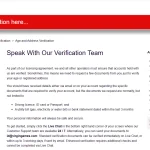
I used to treat the sign-up form as the whole account-opening job. It isn’t. A casino may ask you to prove who you are and where you live, and leaving that until you want to withdraw can turn a simple request into a wait.
The documents commonly requested are a photo of your passport or driving licence and a recent utility bill. Before you register, look for a clear explanation of how to submit them and what the operator accepts. If that information is hard to find, ask customer support before you put money in. A quick answer gives you a better idea of what to expect than a banner promising “easy withdrawals”.
Check that the name and address on your account match the details on your documents. If something has changed, find out how to update the account rather than hoping the difference will go unnoticed. Keep the images readable, too; unclear copies can mean more questions and another round of checking. Small admin. Still matters.
Verification can affect your first withdrawal even if the account seemed ready for play. One specialist review reports that document checks can add 12–24 hours to a first-time withdrawal. Treat that as a possible delay, not a timetable that every casino follows: the review’s estimate is not a promise about your own payment. If you need the money by a particular time, don’t assume the withdrawal will be immediate.
I’d check the verification guidance before signing up, then save a copy of the documents you send and any confirmation you receive. If the operator asks for something you don’t understand, ask why and how it will be used before uploading it. That is a sensible pause, not fussiness.
When you’re weighing how to find a trustworthy online casino, the account-opening details deserve a look alongside the claims on its homepage. Clear instructions, a reachable support channel and a straightforward explanation of document checks won’t guarantee a smooth withdrawal. They do help you spot avoidable surprises before they become your problem.
Safety

Anjouan Casino Licence in the UK: What It Means
Anjouan authorisation operates within its own scope, while gambling services to customers in Great Britain...

Foreign casinos for UK players: how to assess them
A practical guide to UK licensing, bonus terms, cash-out rules and safeguards that may not...

International Casinos for UK Players: Risks and Rules
The meaning of an international casino depends on its licensing, while its terms can shape...

Best Offshore Casino Sites: UK Rules and Risks
A practical guide to licensing, business links, payments and bonus terms—and why a directory listing...

Best offshore casinos for UK players: what to check
A practical guide to market access, deposits, bonuses and payout risks beyond the protection of...

British Casinos Not on GamStop: What to Know
GamStop applies to online casinos licensed by the UK Gambling Commission, while sites outside that...

Casino Sites Not on GamStop: UK Rules Explained
GamStop applies within the UKGC regulatory system, so casinos operating outside it may not be...

Casino Without a Swedish Licence: UK Rules and Risks
A Swedish licence and UKGC oversight are different matters; learn what to check about operators,...

Casinos That Bypass GamStop: What UK Players Should Know
GamStop applies to UKGC-licensed operators, while offshore status alone says little about a casino’s safeguards,...

Curacao Casino Licence in the UK: What It Means
A Curacao licence points to a different regulatory setup from UK oversight, with implications for...

Gibraltar Casino Licence and UK Player Protections
A Gibraltar connection does not establish UKGC oversight; licence status can affect applicable standards and...

Merkur casino online UK: games, demos and checks
The Merkur label alone does not confirm a game's availability or identify who operates a...

Non-Gamban casinos in the UK: what it means
Gamban access, an operator’s checks and national self-exclusion are separate safeguards with different roles. What...

Non-GamStop Curacao Casino Sites: What to Know
GamStop applies to participating operators, while Curacao licence and payment claims require separate verification. What...

Non-GamStop European Casinos: UK Rules Explained
A European location does not determine which protections apply: operators serving Great Britain need a...

Non-UK Licensed Casinos: What a Licence Means
A licence identifies the regulator and framework, but does not guarantee payment speed, bonus suitability...

Non-UK-Registered Casinos: Regulation and Risks
Registration abroad is not UKGC regulation; licensing, GamStop access, payments and bonus terms can all...

Non-UK-Regulated Casinos: What UK Players Should Know
A guide to UKGC oversight, overseas licences, GamStop status, payments and checks that help assess...

Non-UKGC Licensed Casinos in 2026: UK Guide
A UKGC licence authorises an operator to serve customers in Great Britain; overseas regulation is...
Malta-Licensed Online Casinos in the UK: UK Rules
An MGA licence may regulate an operator, but it does not authorise gambling services for...

Online slots not on GamStop: what the phrase means
GamStop applies to the operator, not the slot, so check what a site’s licence and...

Safe Online Casinos in the UK: Checks Before Signup
A practical look at licensing, spending controls, withdrawals and the terms that affect real-money play...

Trusted Casinos Not on GamStop UK: What to Check
A practical look at licensing, self-exclusion, bonus conditions, payment risks and the limits of claims...

Trusted UK Casinos in 2026: Licence Checks
A practical look at licensing, checks, bonuses and payment details—and the limits of calling a...

USA Casinos for UK Players: Licensing and Safety
A US-facing label does not establish UK authorisation; licensing, payment terms and complaint options shape...

VPN-Friendly Casinos in the UK: Rules and Risks
A VPN-friendly label only signals that a casino permits VPN connections; it does not explain...